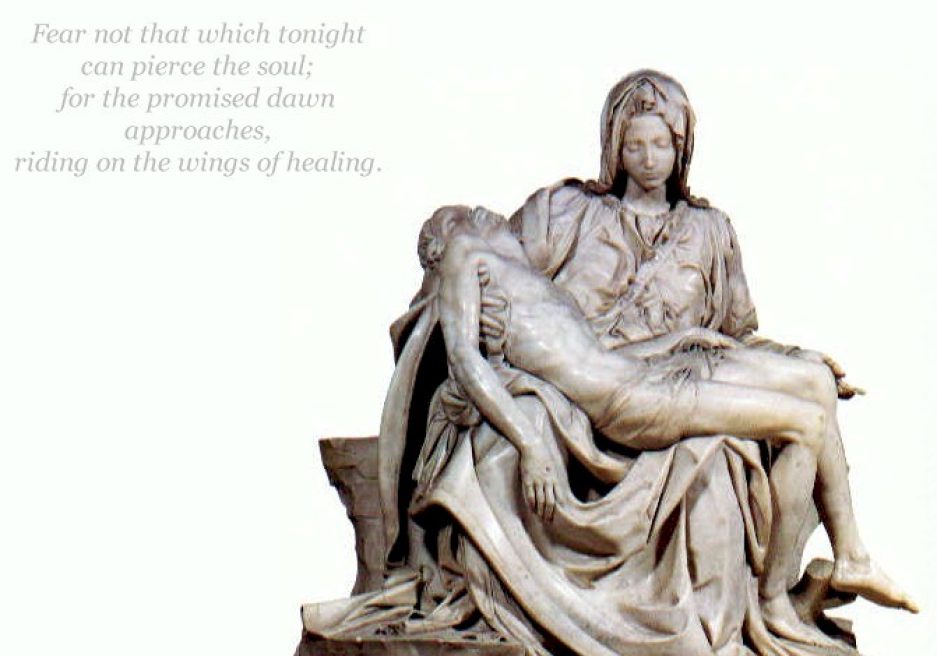
A rebuttal to someone who thought Jesus wasn’t tempted to the same degree with which we are tempted.
You said, “When the Bible says that Jesus was tempted in all things like us I don’t think it’s saying he struggled with it as we do.”
You also said, “And in the garden of Gethsemane I don’t think Jesus was considering abandoning His mission nor praying not to drink from the cup; it was never in doubt.”
Please consider this: Satan tempted Jesus in the wilderness. He hadn’t eaten a bite of food for forty days and forty nights. The devil jumped on the opportunity to tempt Him. He began with “If You are the Son of God..” He was tempting Jesus to prove Himself by commanding stones to become bread. Jesus was extremely hungry by then and He was tempted to turn stones into bread to satisfy His hunger. But He resisted the temptation and said, “It is written, ‘Man shall not live on bread alone, but on every word that proceeds out of the mouth of God.”
He was tested in three different ways and each time He resisted the temptation. The first two began with, “If you are the Son of God.” The devil tried to make Him prove that He was the Son of God. The devil does the same to us, thus all the people claiming promises and claiming to have the authority of Christ. Being unable to believe and trust God, they follow Satan and try to prove themselves. These are those to whom Jesus will say, “Depart from Me, you workers of lawlessness, for I never knew you.”
Seeing that Jesus would not bend to the devil and prove Himself, Satan offered Him all the kingdoms of the world if He would fall and worship him. Through these three temptations, Jesus was weak from lack of food for forty days and nights. He was so weak that angels came and ministered to Him after the devil left.
I believe Jesus struggled with these temptations as much as we would have suffered. So for you to say He never struggled with temptations like we struggle seems to be a little off base. He learned obedience from the things which He suffered. Remember, Jesus was in a human body made like our bodies.
The same with your statement about Gethsemane. Jesus prayed, “Father, if Thou art willing, remove this cup from Me; yet not my will, but thine be done.” Why would Jesus ask the Father if He was willing to forgo the crucifixion if He didn’t want it to go away? He was suffering. I believe He wanted what He asked for, which was to cancel His crucifixion. But, as in all His sufferings, He yielded to the will of God.
Jesus meant every word He spoke throughout His life. The entire word of God means what it says. I believe in the word of God. I received it through visions and revelations. I was born again kneeling in front of Jesus. He was present both when I came from my mother’s womb, and when I was born again.
At times I have stepped out and said or written things that were wrong. The Lord has always reprimanded me when I have done this. So I now try very hard to not speak of anything I think I know. I try to speak only of things I have received from God through His Holy Spirit.
Jesus learned obedience from the things which He suffered. He was tempted in all things as we are because He was made just like us.
Hebrews 2:14–18,
14 Since then the children share in flesh and blood, He Himself likewise also partook of the same, that through death He might render powerless him who had the power of death, that is, the devil;
15 and might deliver those who through fear of death were subject to slavery all their lives.
16 For assuredly He does not give help to angels, but He gives help to the descendant (seed) of Abraham.
17 Therefore, He had to be made like His brethren in all things, that He might become a merciful and faithful high priest in things pertaining to God, to make propitiation for the sins of the people.
18 For since He Himself was tempted in that which He has suffered, He is able to come to the aid of those who are tempted.
Jon David Banks, God’s most unworthy servant
Scripture quotations taken from the (NASB®) New American Standard Bible®, Copyright © 1960, 1971, 1977, 1995 by The Lockman Foundation. Used by permission. All rights reserved. www.lockman.org

 jondavidbanks.com